What Does the FCA Consumer Duty Mean for Your Digital Products?
The FCA Consumer Duty (PS22/9) is not just a compliance checkbox. It is a fundamental shift in how UK financial services firms must think about their customers. Since July 2023, every regulated firm has been required to deliver good outcomes for retail customers, and that obligation extends to every digital touchpoint your customers use.
If your mobile app, online banking portal, or insurance comparison tool creates barriers for customers with disabilities or neurodivergent conditions, you are not meeting the Duty. Full stop.
This guide breaks down exactly what the Consumer Duty requires for digital accessibility, what the FCA expects to see in practice, and the steps your firm should take now to stay ahead of enforcement.
The Four Outcomes and How Digital Accessibility Fits
The Consumer Duty is built around four outcomes. Each one has direct implications for how accessible your digital products are.
1. Products and Services
Products must be designed to meet the needs of identified target markets, including customers with characteristics of vulnerability. The FCA explicitly includes disability and low digital confidence as vulnerability drivers.
What this means in practice: If your savings account is marketed to "all UK adults," your digital application flow must work for the roughly 15-20% of the adult population who are neurodivergent. That includes users with ADHD who lose focus in multi-step forms, dyslexic users who struggle with dense terms and conditions, and autistic users who find ambiguous microcopy confusing.
2. Price and Value
Customers must receive fair value. An inaccessible digital journey that forces a customer to call a branch or use a more expensive channel is a value failure. If your app crashes for screen reader users and they have to visit a branch to complete a transaction, they are receiving worse value than other customers for the same product.
3. Consumer Understanding
Communications must be clear, fair, and not misleading. This is where most digital accessibility failures live. Common violations include:
- Error messages that say "invalid input" without explaining what is wrong
- Terms and conditions written at a reading level that excludes 40% of UK adults
- Colour-only status indicators (red for error, green for success) that are invisible to the 8% of men with colour vision deficiency
- Time-limited processes that do not give users enough time to read and understand information
- Auto-advancing carousels that move too quickly for users with cognitive processing differences
4. Consumer Support
Support must be as easy to access as sales. If a customer can open an account in your app in 5 minutes but needs 45 minutes on hold to report a problem, that is a Consumer Duty failure. The same principle applies to accessibility: if your chatbot does not work with assistive technology, you are providing worse support to disabled customers.
Why WCAG Compliance Is the Floor, Not the Ceiling
Many firms treat WCAG 2.2 AA compliance as the finish line. The FCA does not agree. The Duty requires you to deliver good outcomes, not just meet technical standards.
Automated accessibility scanners catch roughly 30% of issues. They will flag a missing alt text attribute but will not notice that your mortgage calculator uses jargon that 60% of first-time buyers do not understand. They will detect a colour contrast failure but will not identify that your onboarding flow causes anxiety for autistic users because it uses unpredictable navigation patterns.
The remaining 70% of accessibility barriers require human testing, ideally with users who actually experience these barriers daily. That is why neurodivergent user testing is not a nice-to-have. It is how you evidence that your products deliver good outcomes for all customers in your target market.
The FCA on evidence of compliance: "We expect firms to be able to demonstrate that they have considered the needs of customers with characteristics of vulnerability, including those with mental health problems and those who are neurodivergent. Assertion is not evidence. Testing with real users is."
Source: FCA Consumer Duty Implementation Review, 2024
What the FCA Expects to See
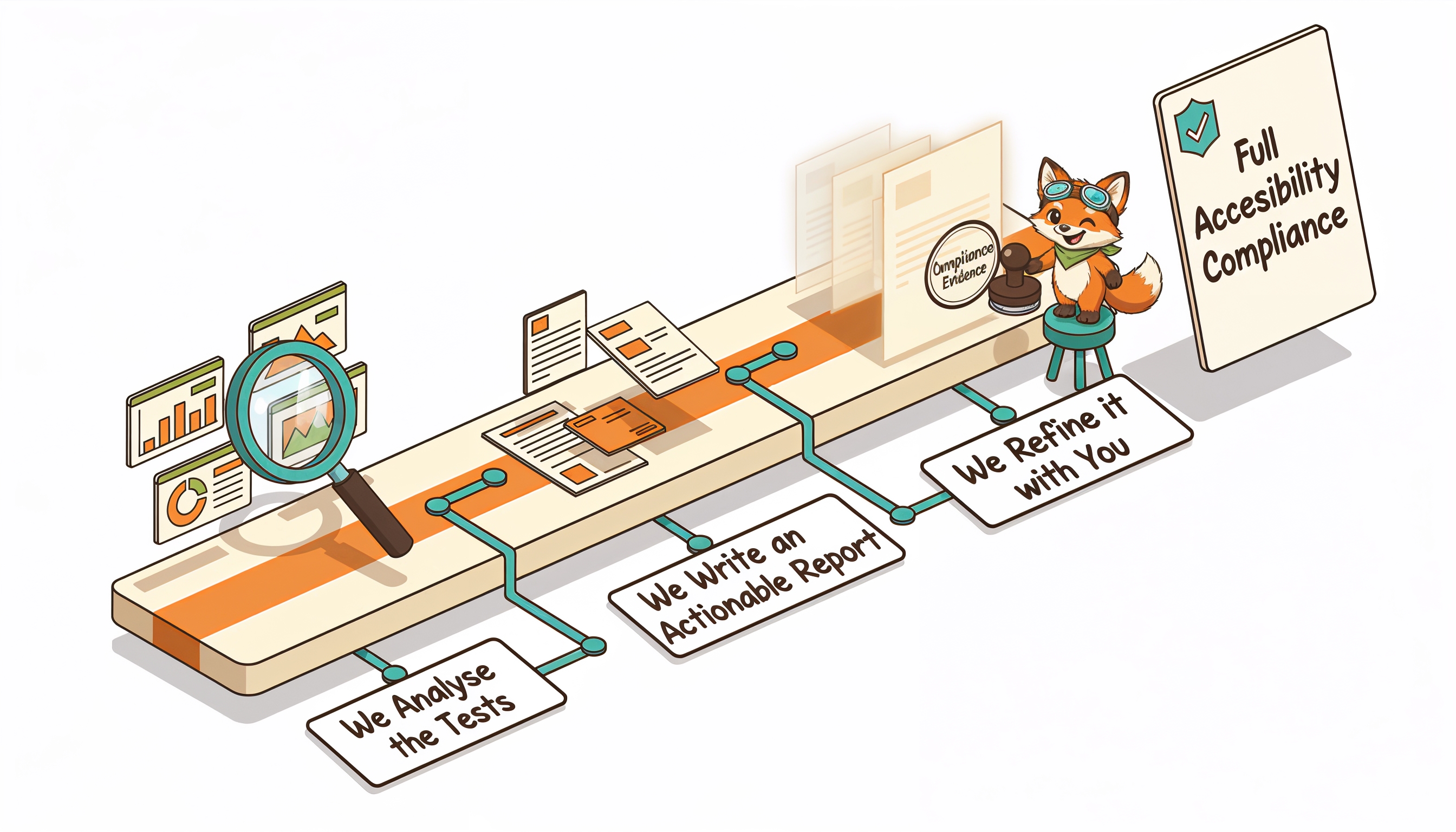
The FCA has been clear that it expects firms to be able to demonstrate compliance, not just assert it. For digital accessibility, that means:
- Testing evidence: Records showing you have tested your digital products with real users, including those with disabilities and neurodivergent conditions
- Outcomes data: Metrics showing whether different customer groups achieve similar outcomes (completion rates, error rates, time-on-task)
- Remediation plans: Documentation showing how you identify, prioritise, and fix accessibility issues
- Governance: Clear ownership of digital accessibility within your firm, with reporting lines to the board or Consumer Duty Champion
- Monitoring: Ongoing processes to catch new accessibility issues as products evolve
The Enforcement Reality
The FCA has signalled that enforcement actions will increase through 2026 and beyond. The regulator has already issued Dear CEO letters highlighting digital accessibility gaps. Firms that cannot demonstrate they have tested their products with diverse users are exposed.
The financial risk is real. FCA fines for Consumer Duty breaches can be unlimited. But the reputational risk may be greater: a public enforcement action for failing disabled customers is a headline no firm wants.
Your Digital Accessibility Compliance Checklist
Here is a practical checklist for financial services firms working towards Consumer Duty compliance for digital products:
| Action | Timeframe | FCA Outcome | Priority |
|---|---|---|---|
| Audit your full digital estate and identify untested products | This quarter | All four outcomes | Critical |
| Run WCAG 2.2 AA automated scans and fix critical violations | This quarter | Consumer Understanding | Critical |
| Commission neurodivergent user testing on highest-traffic journeys | This quarter | Products & Services | Critical |
| Review reading levels and error message clarity | This quarter | Consumer Understanding | High |
| Build accessibility into your software development lifecycle | Next two quarters | Products & Services | High |
| Train developers, designers, product managers, and QA teams | Next two quarters | All four outcomes | High |
| Establish baseline completion-rate metrics by user group | Next two quarters | Price & Value | Medium |
| Create a prioritised accessibility remediation backlog | Next two quarters | Products & Services | Medium |
| Test every release for accessibility before deployment | Ongoing | All four outcomes | Ongoing |
| Include accessibility metrics in board-level Consumer Duty reporting | Ongoing | All four outcomes | Ongoing |
Immediate Actions (This Quarter)
- Audit your digital estate. Identify every customer-facing digital product (apps, portals, calculators, chatbots, PDFs). Map which ones have been accessibility tested and which have not.
- Run WCAG 2.2 AA automated scans. Use tools like axe-core or Lighthouse to catch the 30% of issues that automation can find. Fix critical and serious violations immediately.
- Test with real users. Commission testing with neurodivergent and disabled users. Focus on your highest-traffic journeys first: account opening, payments, claims, support.
- Review your communications. Check reading levels, jargon usage, and clarity of error messages across all digital touchpoints.
Medium-Term Actions (Next Two Quarters)
- Build accessibility into your SDLC. Accessibility requirements should be in user stories, not bolted on after launch.
- Train your teams. Developers, designers, product managers, and QA testers all need accessibility awareness training.
- Establish baseline metrics. Measure task completion rates, error rates, and satisfaction scores across different user groups so you can track improvement.
- Create a remediation backlog. Prioritise accessibility issues by user impact, not just WCAG severity level.
Ongoing Actions
- Test every release. Include accessibility testing in your QA process for every deployment.
- Monitor outcomes. Track whether disabled and neurodivergent customers achieve similar outcomes to other customers.
- Report to the board. Include digital accessibility metrics in your Consumer Duty reporting.
- Refresh testing regularly. Digital products change constantly. Testing done 12 months ago may not reflect the current experience.
How OpenScouter Helps Financial Services Firms
OpenScouter provides the evidence layer that financial services firms need for Consumer Duty compliance. Our platform connects your digital products with neurodivergent testers who use your products in real conditions, capturing behavioural data, facial expressions, and voice feedback to produce compliance-ready reports.
Each report maps findings to WCAG 2.2 criteria and FCA outcome requirements, giving your compliance team the documentation they need and your product team the specific, actionable fixes they can implement.
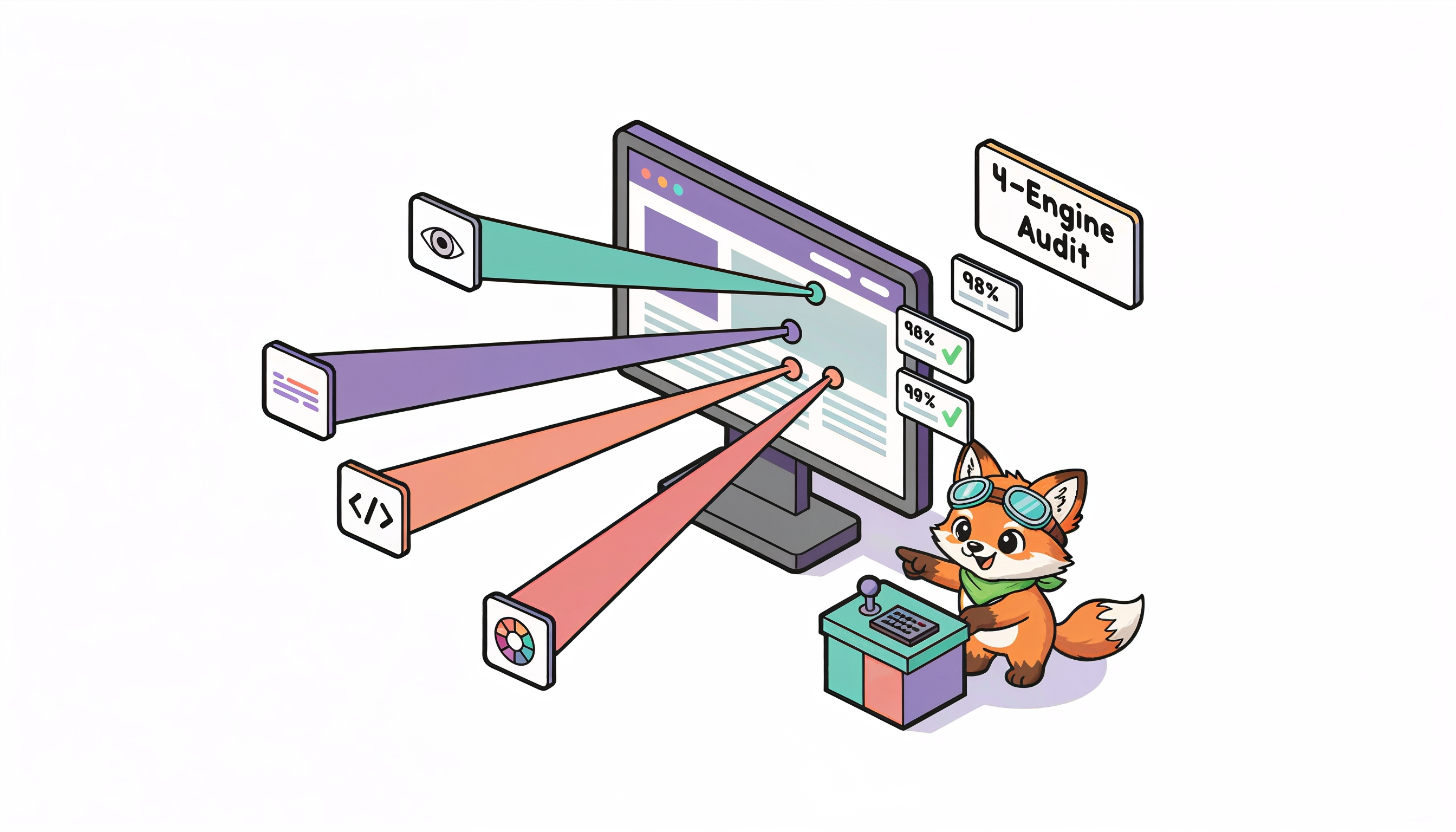
Ready to close your accessibility evidence gap? Request a free accessibility audit and see how your digital products perform with real neurodivergent users.