The Closest Comparison in Accessibility Testing
Fable is the platform most similar to OpenScouter in the accessibility testing space. Both connect organisations with real people who have disabilities to test digital products. Both produce structured accessibility reports. Both believe that automated testing alone is insufficient.
But there are meaningful differences in focus, methodology, data capture, and output that matter when choosing the right platform for your needs.
The key distinction: Fable tests whether your product works with assistive technology. OpenScouter tests whether your product works for the way neurodivergent brains process information. For UK financial services firms facing Consumer Duty obligations, the cognitive dimension is where the regulatory gap is widest.
Panel Focus: Assistive Technology vs Neurodivergent Conditions
Fable: Specialises in connecting organisations with assistive technology (AT) users. Their panel includes people who use screen readers (JAWS, NVDA, VoiceOver), screen magnification, switch devices, and voice control. The focus is primarily on sensory and motor disabilities.
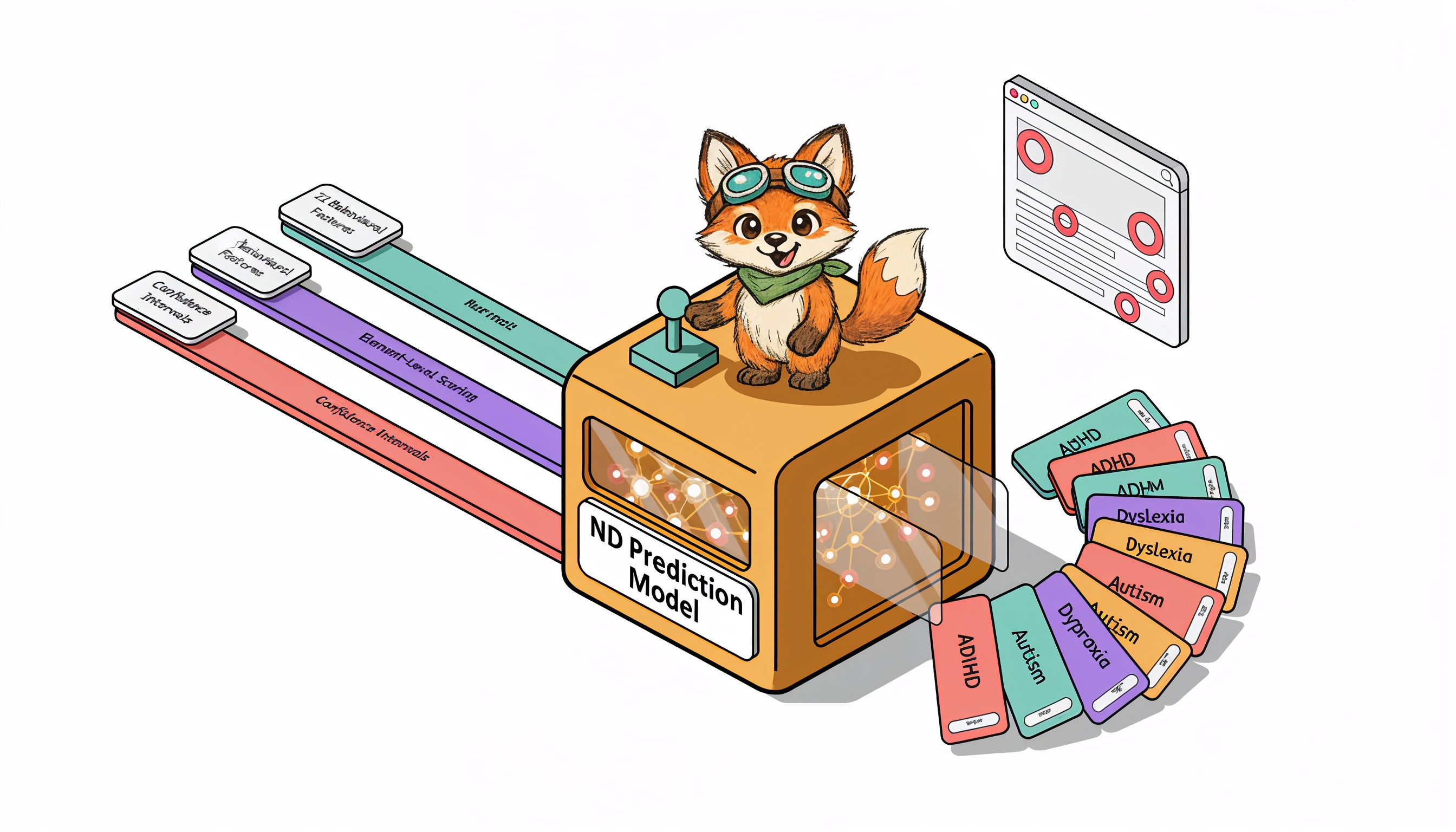
OpenScouter: Specialises in neurodivergent testers, including those with ADHD, dyslexia, autism, dyscalculia, and dyspraxia. The focus is on cognitive accessibility: attention patterns, processing speed, anxiety responses, and executive function challenges that create barriers in digital products.
This is not a quality difference. It is a coverage difference. Fable excels at testing whether your product works with assistive technology. OpenScouter excels at testing whether your product works for the way neurodivergent brains process information.
Data Capture
Fable: Session recordings with think-aloud commentary from AT users. You see how someone navigates with a screen reader or magnification tool. The output is video-based with manual annotations.
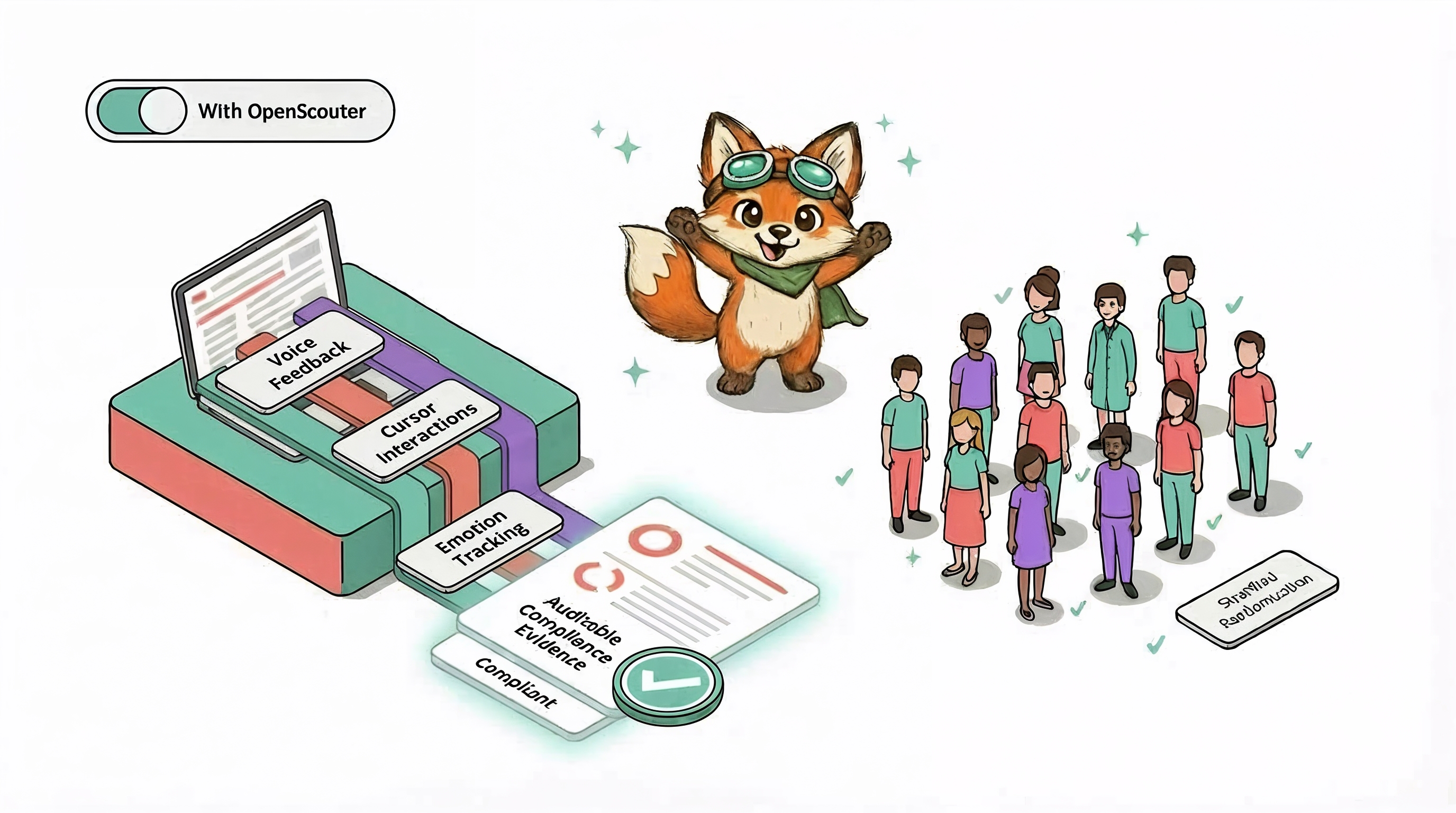
OpenScouter: Three simultaneous data streams per session. Browser-level behavioural events (every click, scroll, hesitation, navigation pattern, error encounter, and rage click), facial expression analysis via webcam (detecting confusion, frustration, anxiety, and engagement in real time), and voice transcripts with sentiment analysis. All three streams are correlated on a single timeline by AI.
The multi-stream approach means OpenScouter can identify patterns that are invisible in video-only sessions. For example: a tester may not verbalise their frustration with a confusing form, but the facial expression data shows confusion and the behavioural data shows they re-read the same field four times before abandoning the task.
Reporting and Compliance
Fable: Produces accessibility reports with findings categorised by WCAG criteria. Reports include tester feedback and video evidence. Well-structured but manually assembled.
OpenScouter: AI-generated reports that synthesise all three data streams. Each finding includes the WCAG criterion, severity score, behavioural evidence (what the tester did), emotional evidence (what the tester felt), and specific remediation guidance. Cross-tester synthesis identifies which issues affect multiple neurodivergent profiles.
Reports also map findings to regulatory frameworks beyond WCAG: FCA Consumer Duty outcomes, EAA functional performance criteria, and Equality Act reasonable adjustment requirements.
| Feature | Fable | OpenScouter |
|---|---|---|
| Primary focus | Assistive technology (screen readers, switch access) | Neurodivergent cognitive accessibility (ADHD, dyslexia, autism) |
| Data capture | Screen recording + think-aloud audio | Behaviour events + facial expressions + voice transcripts (3 streams) |
| Report format | Manual WCAG-categorised findings with video clips | AI-generated reports with behavioural and emotional evidence per finding |
| Regulatory mapping | WCAG 2.2 | WCAG 2.2 + FCA Consumer Duty + EAA + Equality Act |
| Geographic focus | North America (enterprise tech) | UK and EU (financial services, public sector) |
| Tester screening | Verified AT users | Verified neurodivergent conditions (ADHD, dyslexia, autism, dyspraxia, dyscalculia) |
| Analysis method | Manual expert annotation | AI-powered multi-stream correlation |
Geographic and Industry Focus
Fable: Strong presence in North America, particularly with enterprise technology companies. Panel includes testers globally but with a North American concentration.
OpenScouter: UK-focused, with deep expertise in UK financial services regulation. Strong alignment with FCA Consumer Duty requirements, EAA compliance, and UK public sector accessibility standards. Panel concentrated in the UK and EU.
When to Choose Each
Choose Fable When:
- Your primary concern is assistive technology compatibility (screen readers, switch access, magnification)
- You need to test with users who have visual or motor impairments specifically
- You are a North American enterprise company
- You want moderated research sessions with AT users
Choose OpenScouter When:
- Your primary concern is cognitive accessibility and neurodivergent user experience
- You need multi-stream behavioural data, not just video recordings
- You need compliance evidence specifically for UK regulators (FCA, Equality Act)
- You want AI-powered analysis that scales with your testing volume
- You are in UK financial services, insurance, healthcare, or government
Use Both When:
- You want comprehensive accessibility coverage: assistive technology testing (Fable) plus neurodivergent cognitive testing (OpenScouter)
- You serve both North American and UK/EU markets with different regulatory requirements
For UK financial services: FCA Consumer Duty enforcement focuses on outcomes for customers with "characteristics of vulnerability," which explicitly includes neurodivergent conditions. AT testing alone does not satisfy this requirement. You need cognitive accessibility evidence from real neurodivergent users.
The Bottom Line
Fable and OpenScouter address different dimensions of accessibility. Fable answers "does this work with assistive technology?" OpenScouter answers "does this work for neurodivergent brains?" Both questions matter. For UK financial services firms facing Consumer Duty obligations, the cognitive accessibility dimension is where the regulatory gap is widest.
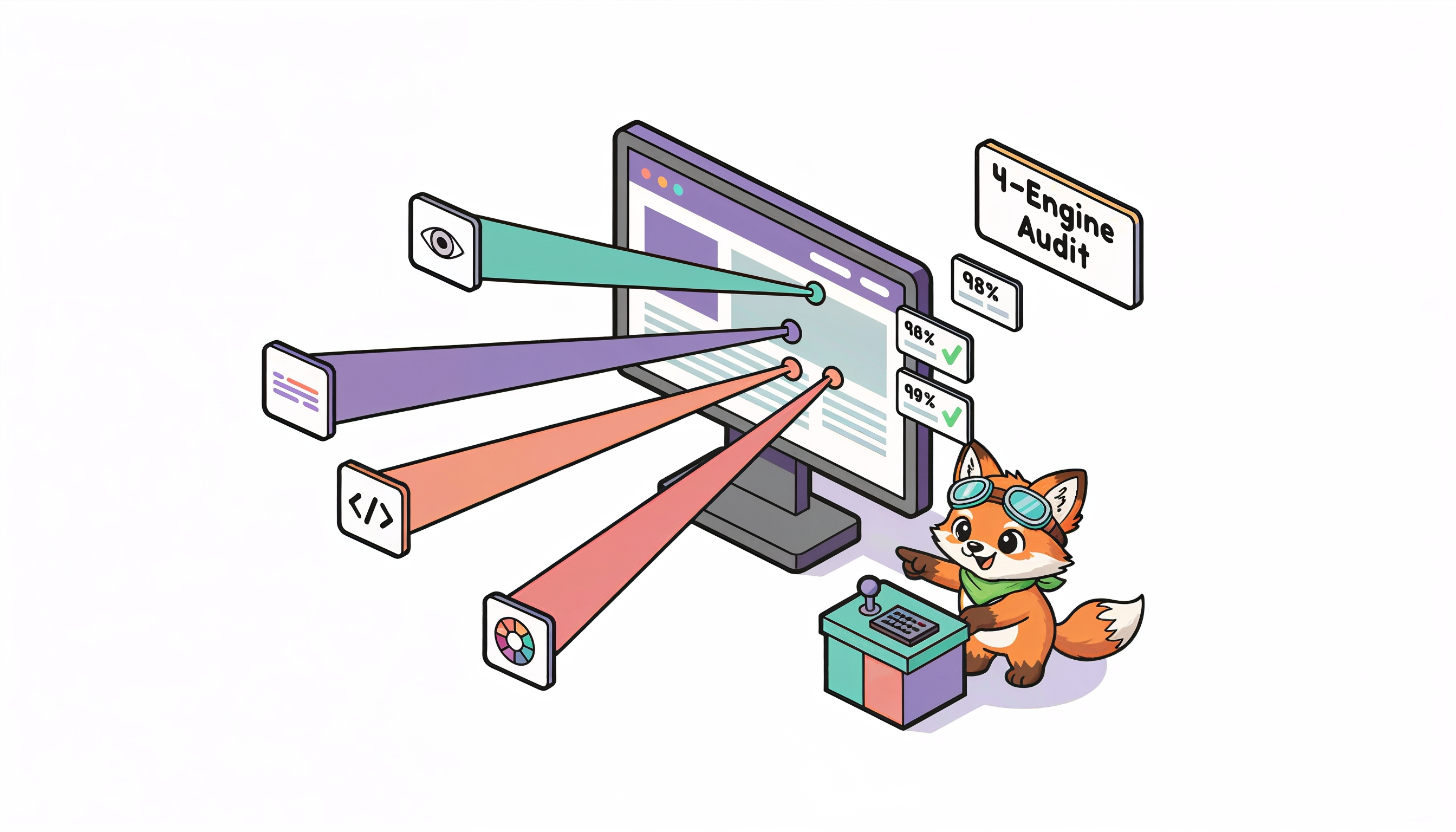
See how neurodivergent testing reveals what AT testing misses. Request a free accessibility audit and get your first compliance-ready report.